
Anthony B.
Australia · August 3, 2026
What stood out was the communication. The route, lodges, walking hours and altitude days were explained clearly, so the trek felt organised without becoming too rigid.
A carefully paced, private route through the Khumbu to the foot of the world's highest mountain — with two full acclimatization days and a buffer day built in, not squeezed out.
The Everest Base Camp Trek is the classic route through the Khumbu — the one most people picture when they imagine trekking in Nepal. It follows the Dudh Koshi valley from Lukla up through Namche Bazaar, Tengboche, and Dingboche, before reaching Everest Base Camp itself and the sunrise viewpoint at Kala Patthar.
We run this as a private departure, not a fixed group trip, which means your pace, rest days, and hotel standard in Kathmandu can all be adjusted. The itinerary below reflects how we actually plan it for guests: two dedicated acclimatization days at Namche and Dingboche, and one buffer day near the end for Lukla’s often unpredictable flight schedule — rather than a tightly packed route that leaves no room for weather.
USD
1,450–1,750 pp
Good lodge-based plan with guide, porter support, permits, Lukla flights and standard Kathmandu hotel level.
USD
1,750–2,250 pp
Used when guests want better Kathmandu hotels, extra buffer nights, upgraded rooms where possible, or slower pacing.
Group size, domestic flight routing, porter ratio, hotel category, single rooms, season, and any helicopter or comfort upgrades.
| Day | Route | Overnight |
|---|---|---|
| 01 | Arrive in Kathmandu | Kathmandu (1,400m) |
| 02 | Fly to Lukla, trek to Phakding | Phakding (2,610m) |
| 03 | Trek to Namche Bazaar | Namche Bazaar (3,440m) |
| 04 | Acclimatization day in Namche | Namche Bazaar (3,440m) |
| 05 | Trek to Tengboche | Tengboche (3,860m) |
| 06 | Trek to Dingboche | Dingboche (4,410m) |
| 07 | Acclimatization day in Dingboche | Dingboche (4,410m) |
| 08 | Trek to Lobuche | Lobuche (4,940m) |
| 09 | Trek to Gorak Shep, visit Everest Base Camp | Gorak Shep (5,164m) |
| 10 | Sunrise at Kala Patthar, trek to Pheriche | Pheriche (4,240m) |
| 11 | Trek to Namche Bazaar | Namche Bazaar (3,440m) |
| 12 | Trek to Lukla | Lukla (2,860m) |
| 13 | Buffer day / fly to Kathmandu | Kathmandu (1,400m) |
| 14-15 | Free days in Kathmandu | - |
| 16 | Departure | - |
You’re met at Tribhuvan International Airport and taken to your hotel in Kathmandu. Depending on arrival time, the rest of the day is free — we can arrange a short Kathmandu Valley orientation or simply let you rest before the trek begins. Your guide will meet you in the evening to go through the route, gear check, and any last questions.
A short, scenic flight takes you from Kathmandu to Lukla’s Tenzing-Hillary Airport — one of the more memorable starts to any trek. From Lukla, an easy few hours of walking, mostly downhill and along the Dudh Koshi river, brings you to the small village of Phakding.
Note: in peak season, this flight sometimes departs from Ramechhap (a few hours’ drive from Kathmandu) instead, due to airport congestion. We’ll confirm the exact routing closer to your dates.
The trail crosses several suspension bridges over the Dudh Koshi before climbing steeply into Sagarmatha National Park and up to Namche Bazaar — the unofficial capital of the Khumbu, and your first real glimpse of Everest on a clear day, from a viewpoint just before the village.
Rather than a rest day spent sitting still, this is a “climb high, sleep low” day — a walk up to Everest View Hotel or the Khumjung valley to aid acclimatization, before returning to sleep in Namche. This is one of the two acclimatization days we build into every EBC itinerary, not an optional extra.
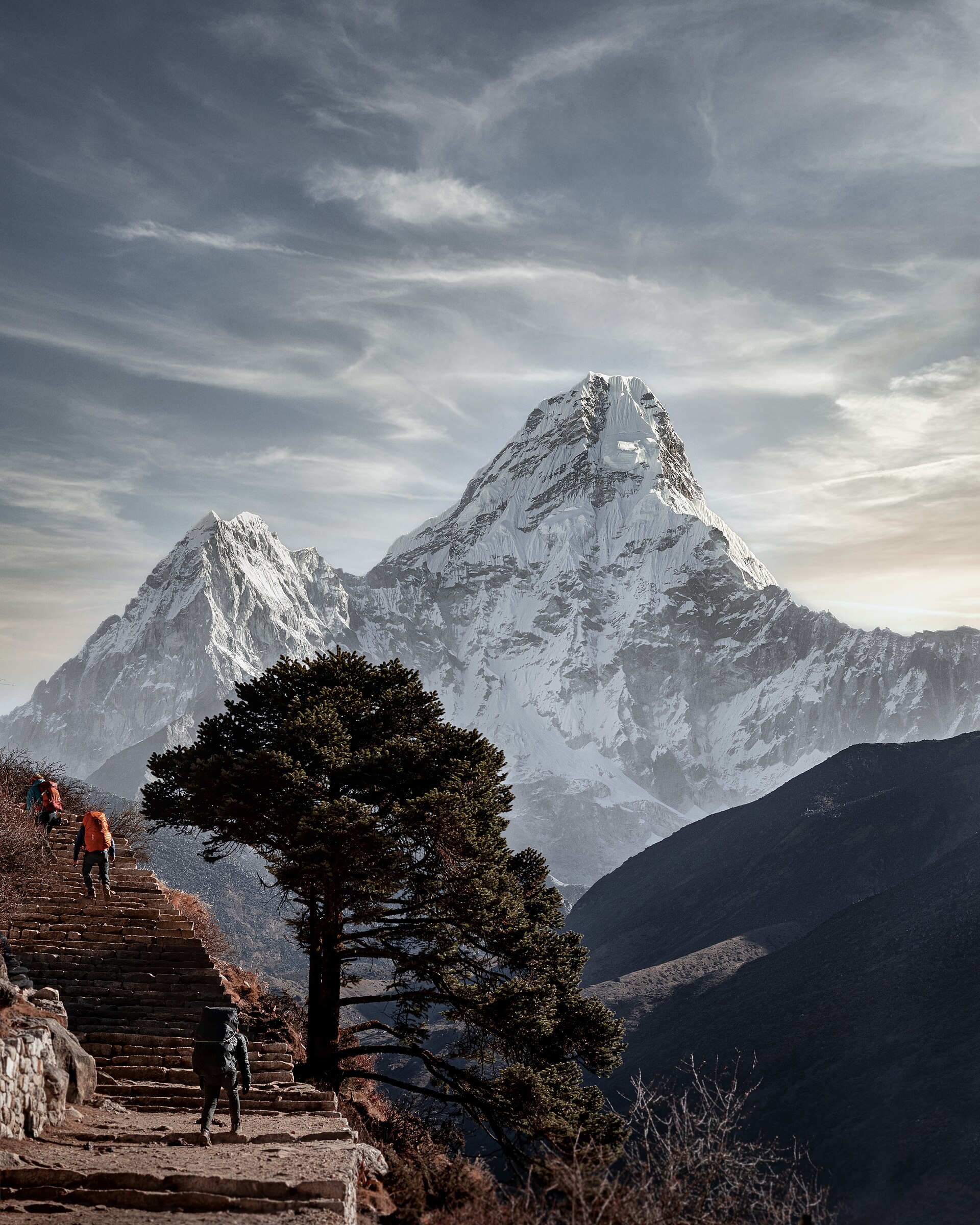
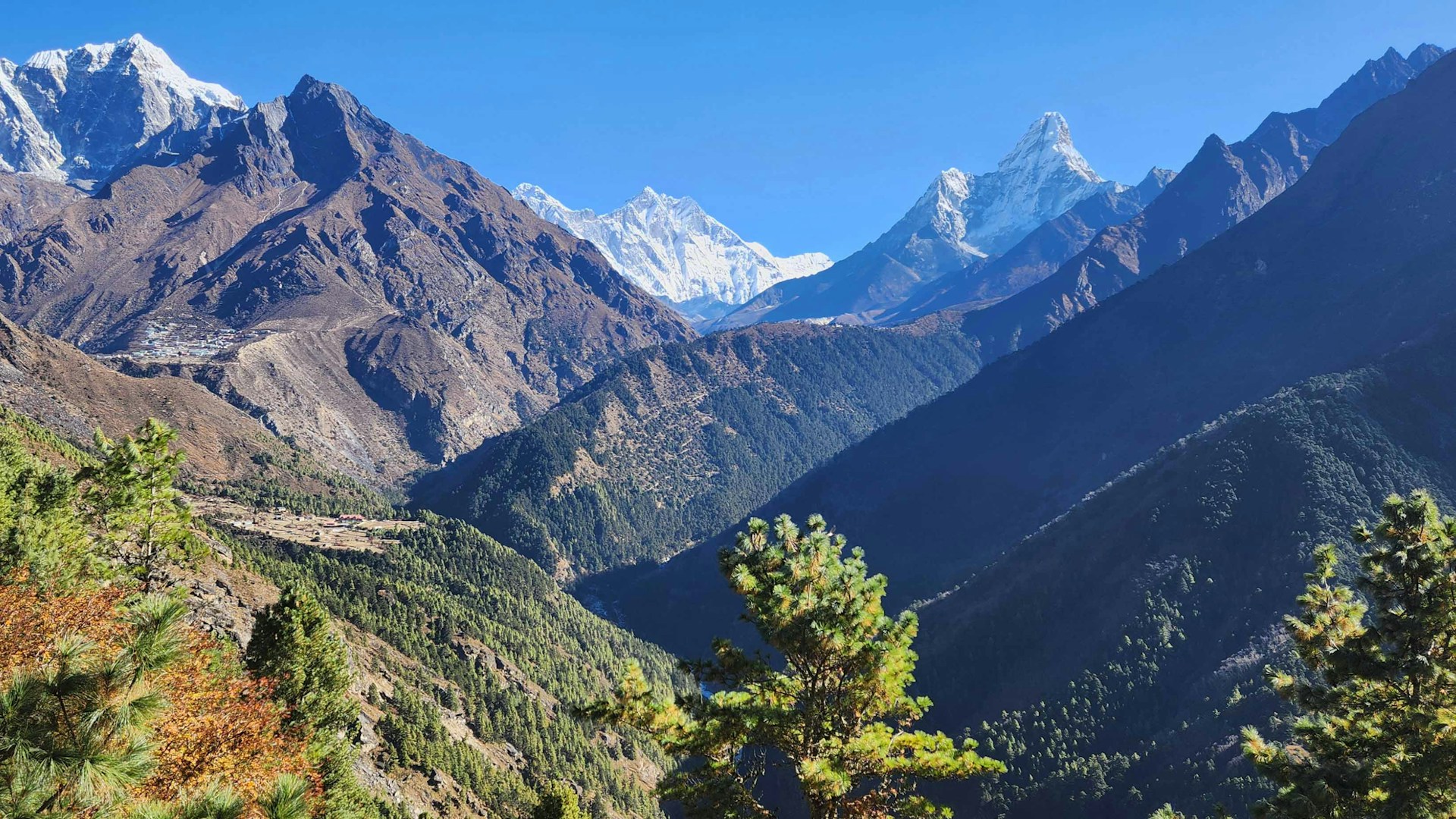
A rolling trail through rhododendron forest, with Ama Dablam visible for much of the way, leads to Tengboche — home to the Khumbu’s most significant monastery. If timed right, you can sit in on the monks’ afternoon prayer session.
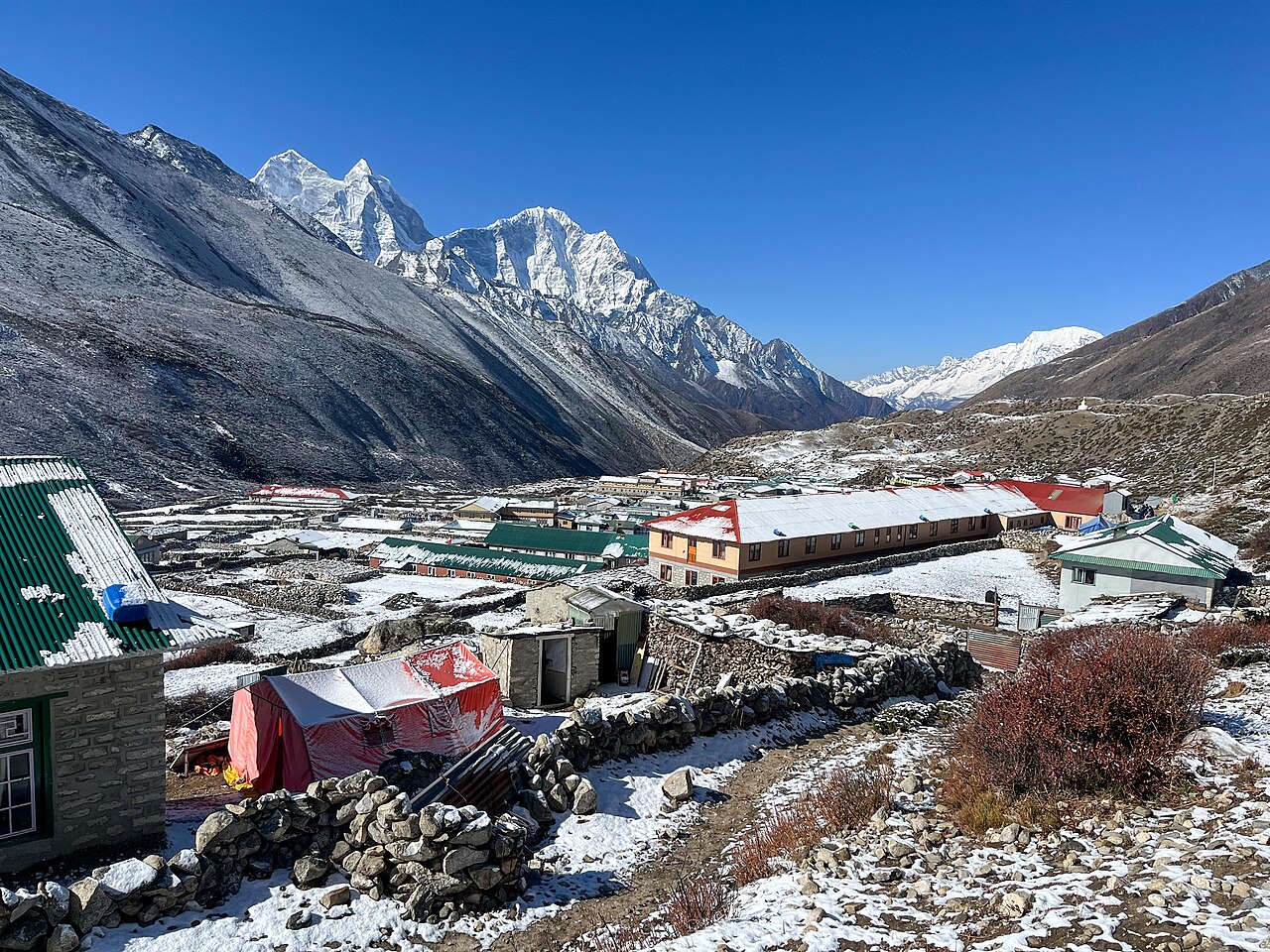
The trail leaves the forest behind for good here, opening into the drier, wider Imja valley. The terrain and the air both start to feel different — this is where the trek’s altitude becomes tangible.
Our second built-in acclimatization day. Most guests walk up Nangkartshang Hill for a wide view over the Chukhung valley and back down toward Ama Dablam, then rest for the afternoo
The trail passes the memorials for climbers who lost their lives on Everest, a quiet and often moving stretch, before reaching the small settlement of Lobuche beneath the Khumbu glacier’s edge.
The longest day on the trek. You’ll drop your bags in Gorak Shep before continuing on to Everest Base Camp itself, walking alongside the Khumbu Glacier. There’s no direct view of Everest’s summit from Base Camp — that comes tomorrow — but standing beneath the Khumbu Icefall, where expeditions begin their climb, is the moment most people come for.
A pre-dawn climb to Kala Patthar — the highest point of the trek — for sunrise over Everest, Nuptse, and Lhotse. This is the actual summit view that Base Camp doesn’t offer. From here, it’s a long descent back down to Pheriche, both to make progress and to lose altitude for better rest.
A long but straightforward descent back to Namche, retracing the route through Tengboche. Most guests notice how much easier the walking feels with every drop in altitude.
The final day of walking, back down to Lukla. It’s traditional to celebrate with your guide and porter team on this last night on the trail.
Lukla flights are weather-dependent and delays are common, so this day exists on purpose — if your flight goes as scheduled, you’ll have an afternoon free in Kathmandu. If it doesn’t, this is the day that absorbs the delay instead of your international departure.
Rest, or let us arrange a Kathmandu Valley sightseeing day — Durbar Square, Boudhanath, and Pashupatinath can all be covered in a single guided day if you’d like to use the time that way.
Transfer to Tribhuvan International Airport for your onward flight.
No technical climbing skills are needed, but you should be comfortable walking 5–7 hours a day for multiple days in a row. Prior hiking experience helps; regular cardio training beforehand helps more.
Two full acclimatization days are built into this itinerary, and your guide monitors for signs of altitude sickness throughout. We can adjust the pace further if needed — that flexibility is part of why we run this privately.
The Sagarmatha National Park permit and local municipality entry fee are arranged by us and included in your quote — no separate paperwork needed on your end.
Short route-specific feedback from travelers who joined this journey. Replace with verified guest comments before launch.
What stood out was the communication. The route, lodges, walking hours and altitude days were explained clearly, so the trek felt organised without becoming too rigid.
The trek was challenging, but the pacing felt sensible from the beginning. Our guide checked how everyone was feeling each day, and the Kathmandu team stayed flexible when mountain weather affected timing.